Learning with AIEducation quality
An hour of live building with teachers during Assessment Literacy Week, now available to watch
What happens when you give teachers an hour to build their own learning app? We tried it on Monday 2 November during the Dutch Assessment Literacy Week (Week van de Toetsbekwaamheid). No presentation full of theory, but building practice and assessment apps together, in plain language and with AI as a building partner.
The recording is now online as a 25-minute compilation. It has chapters, so you can jump straight to the part that interests you. The session is in Dutch, with English subtitles available.
From learning objective to practice space
For me, assessment literacy is not only about good summative tests. It is also about how students can practise beforehand, so they understand what is expected of them. In recent years we have overloaded students with rubrics and learning outcomes of three or four sentences. Making sense of those takes quite a lot of metacognition.
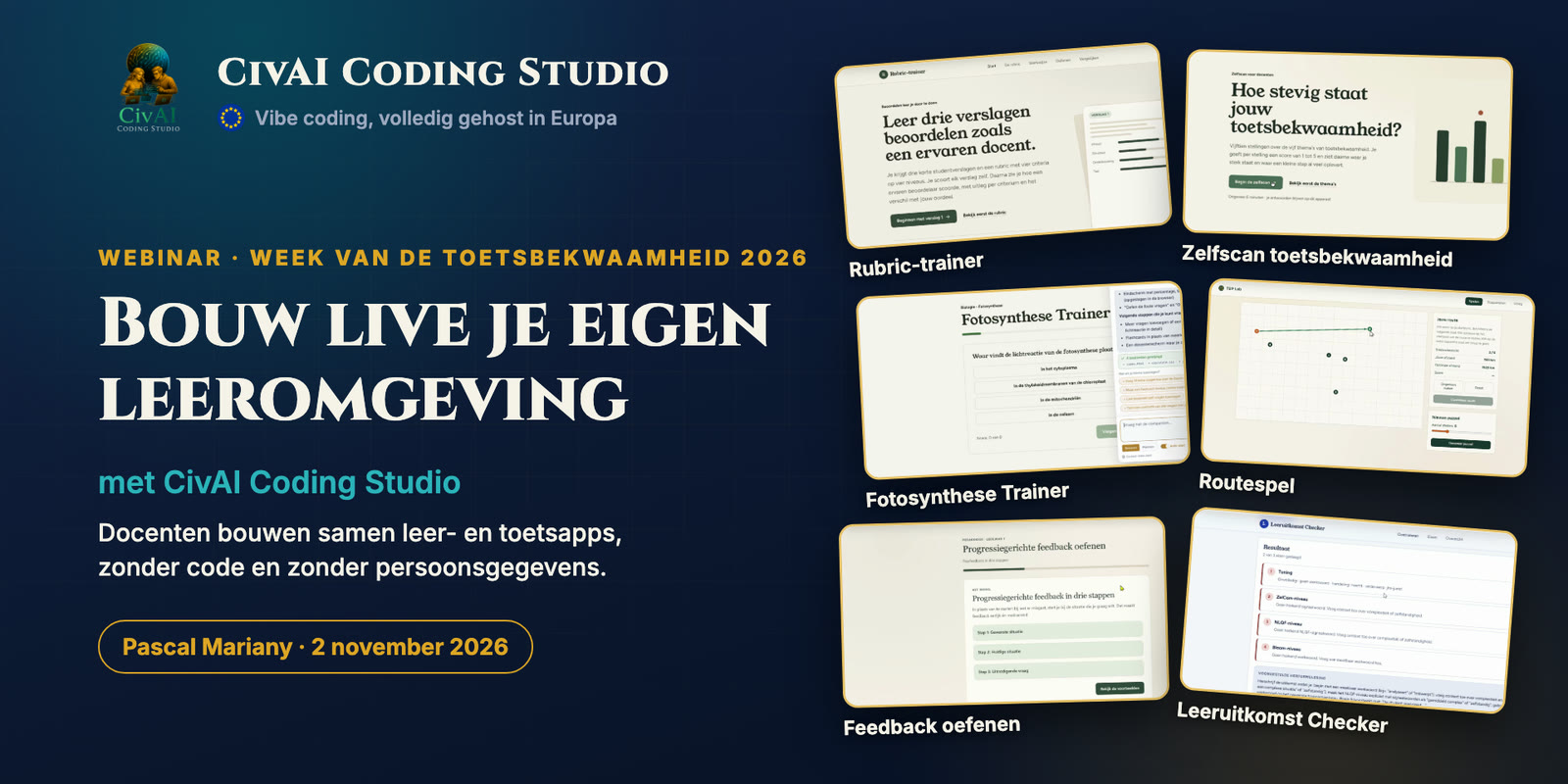
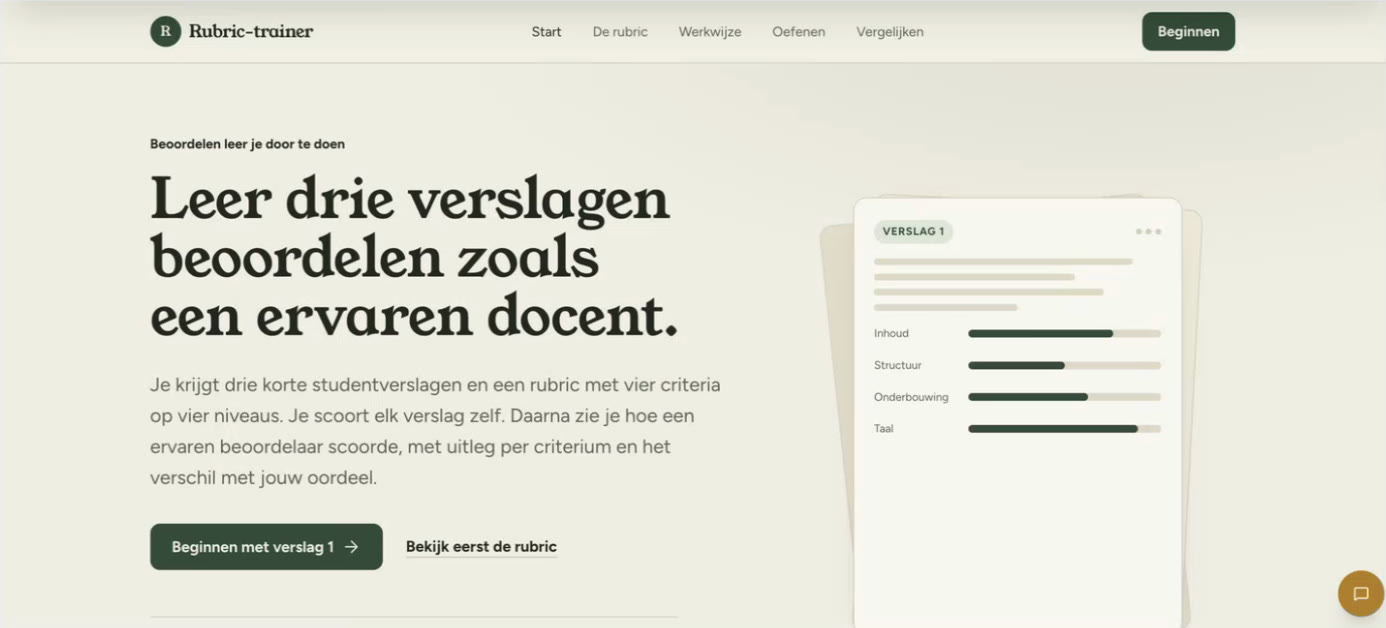
That is why I showed a rubric trainer in the session. Students assess three short reports themselves and then see how an experienced teacher scored them, with an explanation per criterion and the difference from their own judgement. Calibration in practice, in the student's own time.
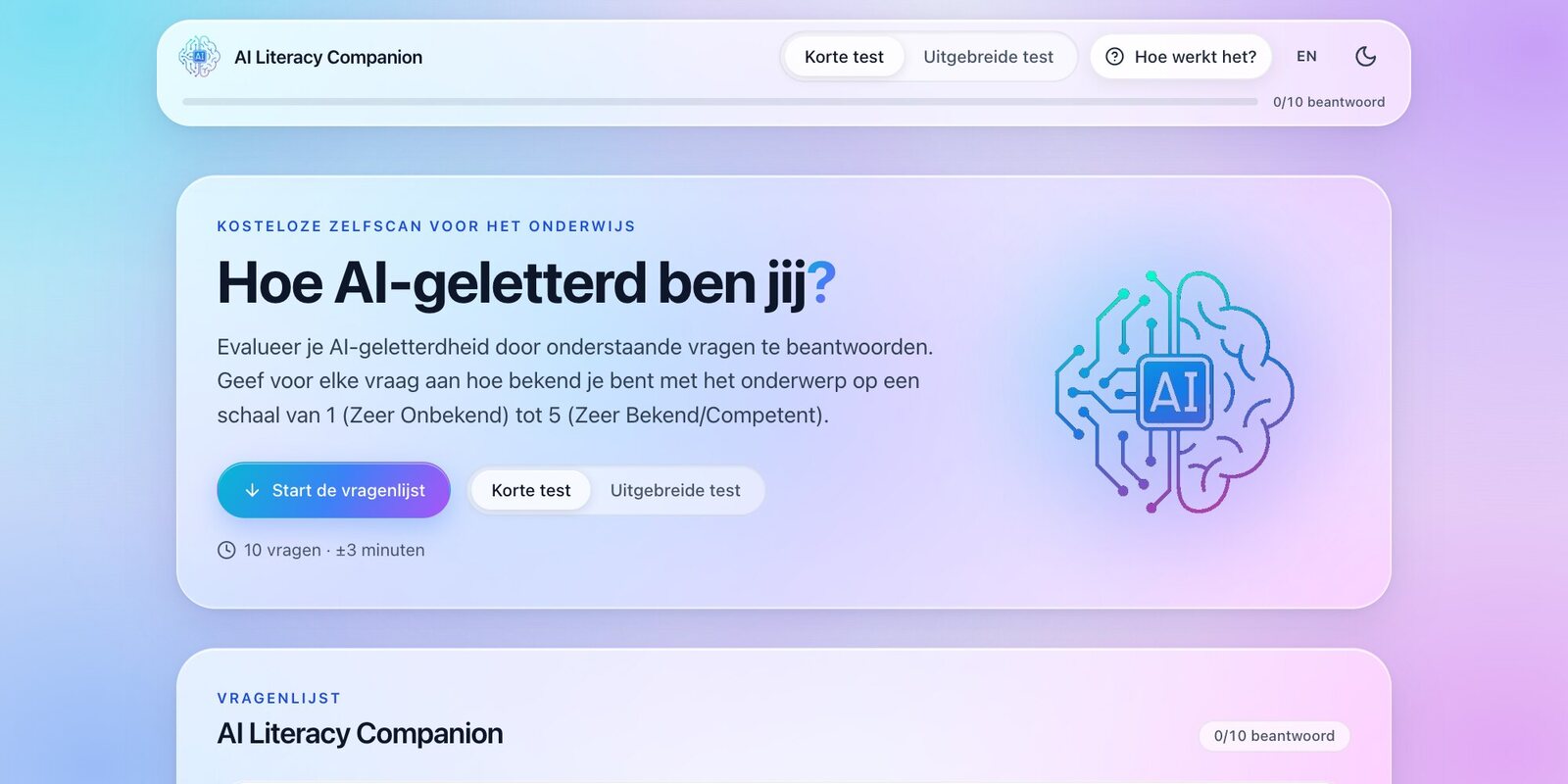
I also showed a self-scan that lets teachers map their own assessment literacy across five themes. And I built a learning app about photosynthesis live, starting from a single sentence in the chat.
What the participants built
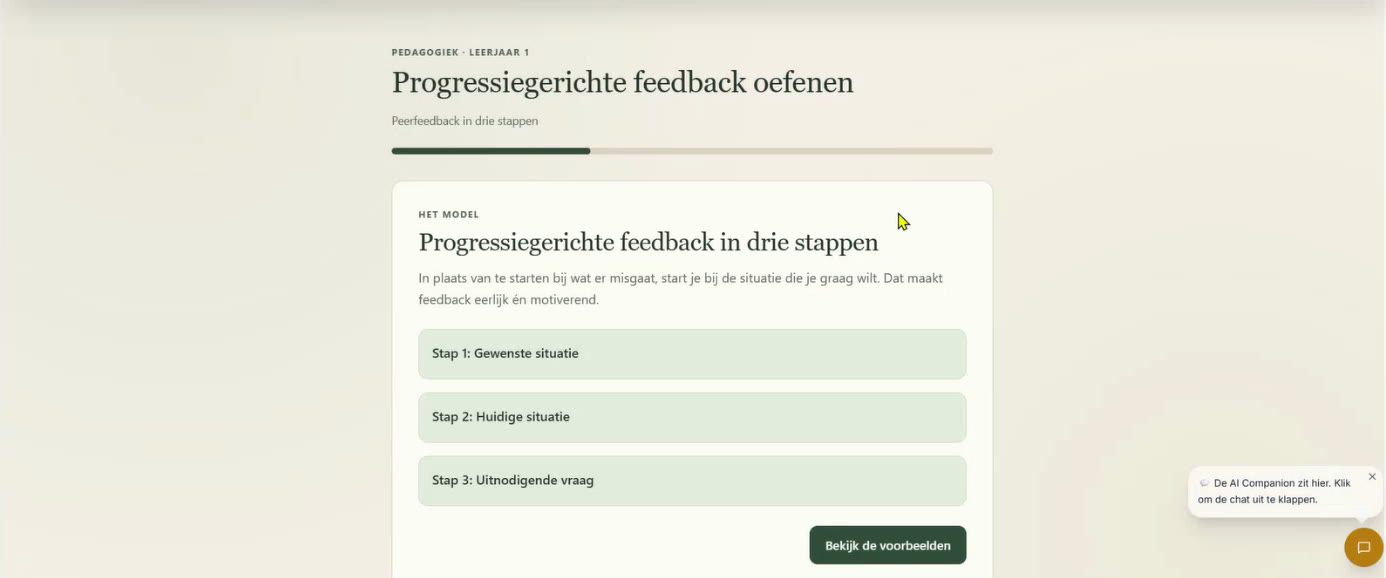
The best part of the session was when participants showed their own apps. A pedagogy teacher built a trainer for practising progress-oriented feedback in three steps, with strong and weak examples, cases and tips instead of ready-made corrections.
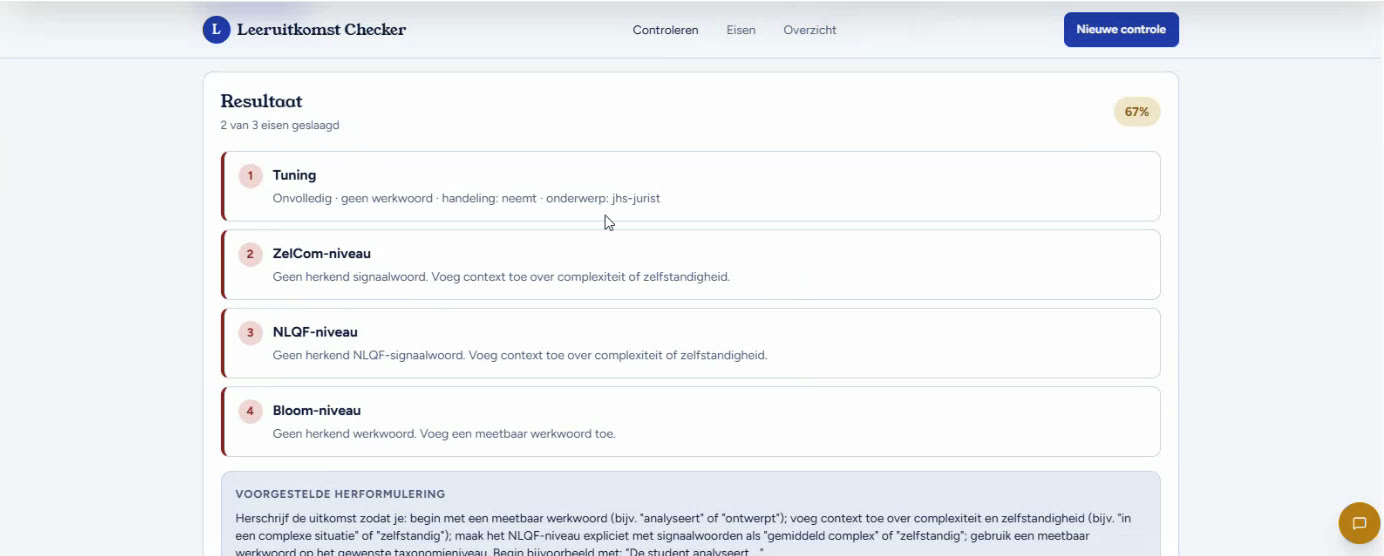
Another participant created a learning outcomes checker that looks at the verb, the Bloom level and the NLQF level, and suggests a reformulation. And together we debugged a route game about the travelling salesman problem live. It did not work straight away, and that is exactly where we learned the most.
The teacher remains the designer
This ties in with the HEAR model from my book The Art of Living with AI. It starts with the teacher's intention, the Human Intent. You know which learning objective you want to achieve and what your students need. The AI thinks along, proposes a build plan and builds step by step. But you test the app, you adjust it and you decide whether it is good enough for your students. That responsibility, the Reasoned Responsibility, stays with the human.
Privacy and the ethical side
A fair question from the audience was about student work. Many institutions do not allow you to simply enter it into an AI tool, and rightly so. You can build plenty of useful apps that students practise with without logging in and without personal data. In the session we worked in CivAI Coding Studio, which runs entirely in Europe.
We also looked at the ecological footprint of AI. Be economical with your prompts, choose suppliers that give something back to the planet and simply discuss it with your students. Using AI consciously is part of AI literacy.
Thank you
Many thanks to all participants who dared to build along, shared their screens and gave honest feedback. And a big thank you to the Netwerk Toetsbekwaamheid h(b)o and everyone behind the Week van de Toetsbekwaamheid for organising it and for the opportunity to show this. It is great that there is such a platform for assessment and innovation.
Try it yourself or continue together
Want to get started yourself? You can, free of charge, at civaicodingstudio.eu. You will find more videos about AI in education in the playlist Leren met AI on the Education Oracle YouTube channel.
Would you like a workshop on AI and assessment for your team or programme, or to build learning apps for your own subject together? Get in touch and I will gladly think along with you.
Transparency. CivAI Coding Studio is a product of CivAI, of which I am a co-founder.